Traits
Skink (nSki/SkiSki) (Rare)
Category: Rixixi
Species: Rixixi
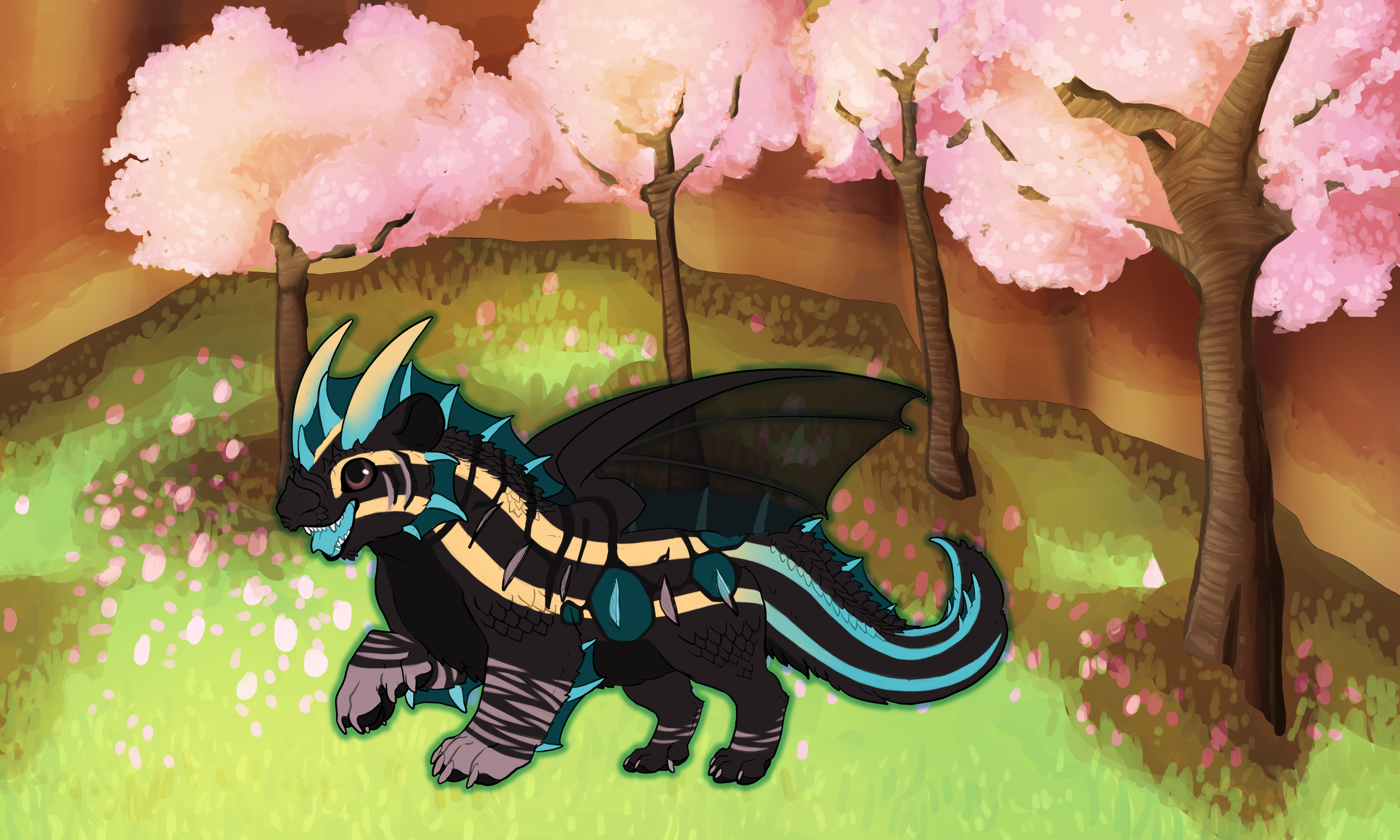
Colorful stripes going down the side from eye to tail. Skink may take on the color of any one to two base coats. Dominant Skink may take up to three colors.
- Skink must flow in the direction of eye to tail. It does not have to touch the eye or the tail, this is simply the direction it must flow. Skink can start and stop anywhere on the side, but each stripe should consist of a single unbroken line, not multiple bars in a row.
- You can have as many Skink stripes as you want from back to underbelly, and as many as you want going down the legs.
- Skink can be the color of any one or two base coats. The two colors can be gradiented together, or can be separate colors on separate stripes.
- Dominant Skink may be three colors - similar to recessive Skink, this may be gradiented together or three separate colors on separate stripes.
- Edge may be hard, textured, or somewhat soft. It should not be fully blended out.
Examples:
Chrysopoeia (+Chryso) (Non-Passable)
Category: Rixixi
Species: Rixixi
Encases or covers part of the Ixi in gold.
Chrysopoeia is classed as Non-Passable, and is only passable in breeding with the Body Glitter skill.
It is obtained via the Gemcrafted Shard - Chrysopoeia item.
- Must be the color of a type of gold or gold alloy. If using a gold alloy, it's recommended to list what metal you referenced if it might not be immediately clear! (For instance, the Rock Collector's Chrysopoeia referenced Electrum.)
- Chrysopoeia must be immediately visible on the design, but must not cover more than approximately 30%.
Examples:

Gemcrafted genes do not pass to offspring without the Body Glitter skill. They cannot be dominant, and cannot be added with geno-editing items other than their own shards. When passable, Gemcrafted genes pass at an Uncommon rate.
Forgeblood (+Forge) (Non-Passable)
Category: Rixixi
Species: Rixixi
Turns the blood color of the Ixi metallic. Certain areas of the Ixi where skin can show through the fur can display with a metallic 'blush'.
Forgeblood is classed as Non-Passable, and is only passable in breeding with the Body Glitter skill.
It is obtained via the Gemcrafted Shard - Forgeblood item.
Range:


Range for blush zones.
- Can be the color of any metal, such as gold, silver, copper, bronze, etc. Uncommon metal colors are allowed, it's recommended to list what metal you referenced if it might not be immediately clear!
- If markings/mutations that involve blood/flesh color are present (such as Daggerstabbed, Wide Vents, and so on), Forgeblood should affect at least one of them. Can optionally affect skin, frills, etc.
- Can present with a metallic sheen.
Anodized Forgeblood (+Andz) (Non-Passable)
Category: Rixixi
Species: Rixixi
Turns the blood color of the Ixi neon. Certain areas of the Ixi where skin can show through the fur can display with a neon 'blush'.
Anodized Forgeblood is classed as Non-Passable, and is only passable in breeding with the Body Glitter skill.
It is obtained via the Gemcrafted Shard - Anodized Forgeblood item.
Range:
Range for blush zones.
- Can be any bright color. It is okay to use multiple colors blended together!
- If markings/mutations that involve blood/flesh color are present (such as Daggerstabbed, Wide Vents, and so on), Anodized Forgeblood should affect at least one of them. Can optionally affect skin, frills, etc.
- Can present with a metallic sheen.
Gemcrafted genes do not pass to offspring without the Body Glitter skill. They cannot be dominant, and cannot be added with geno-editing items other than their own shards. When passable, Gemcrafted genes pass at an Uncommon rate.
Prismpitch (+Prism) (Non-Passable)
Category: Rixixi
Species: Rixixi
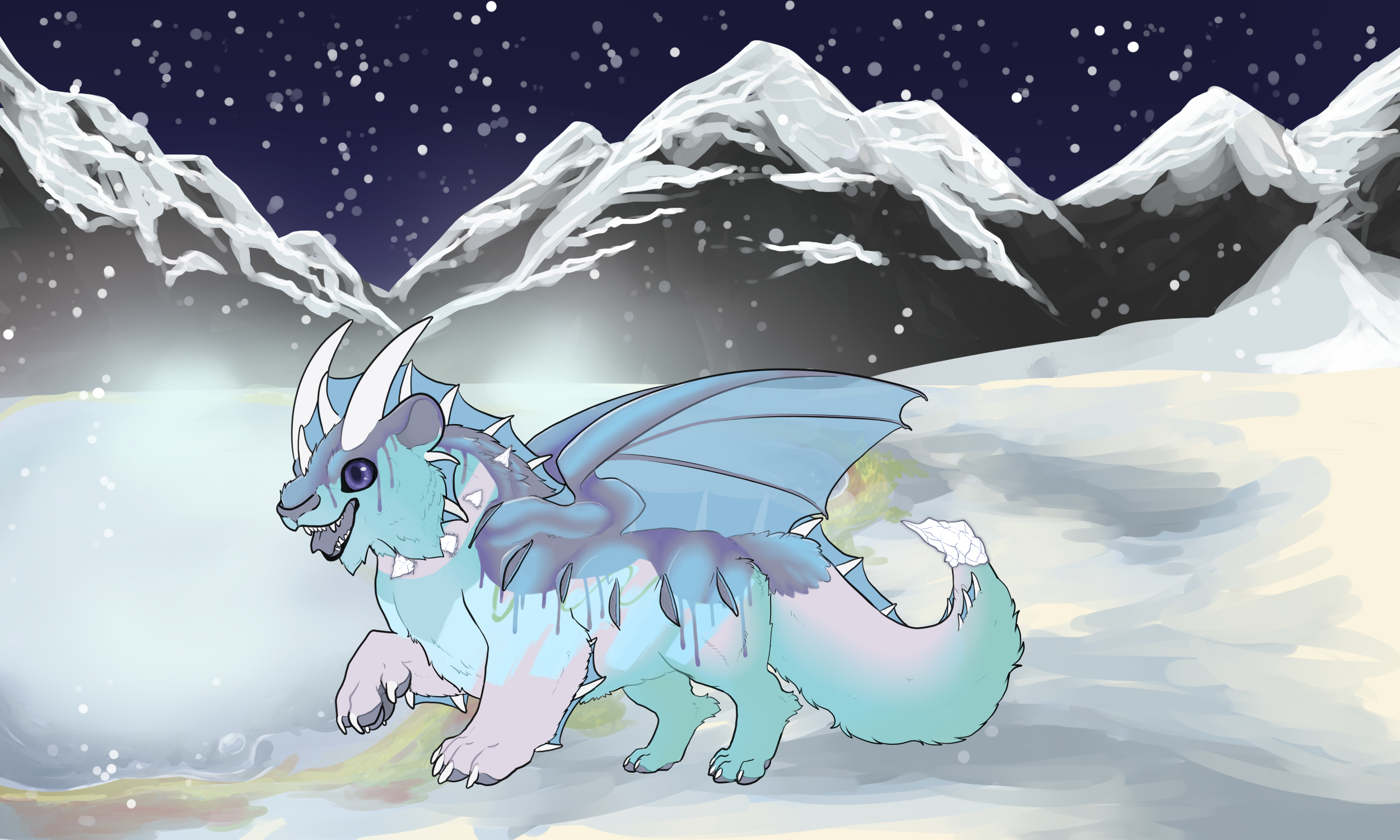
Changes the entire coat including markings into a CYMK (Cyan/Magenta/Yellow/Black) color scheme, with the base coat being a greyscale tone and all markings being colorful.
Prismpitch is classed as Non-Passable, and is only passable in breeding with the Body Glitter skill.
It is obtained via the Gemcrafted Shard - Prismpitch item.

Prismpitch uses its own sliders.
- These rules can be overridden by some modifiers, see below.
- The base coat should use only the bottom slider, while markings should use the top three (C/Y/M) sliders.
- All slider colors should be present if possible (for example, if fewer than three markings are present, or if a modifier overrides this color rule, ignore this).
- Small drips can be added to the lineart to imply a mildly inky body texture. These can have a shine, but should not completely overtake the entire body or result in shading over a large portion of the body.
Additionally:
- Prismpitch does not have to affect skin tone.
- Prismpitch has no effect on eye color.
- Prismpitch should combine with or override color mutations (see below), but physical mutations with their own color (eg Incense, Gills, Fogshard, all blood color mutations, etc) can override Prismpitch.
- Prismpitch can affect Skypunch, or Skypunch can display over it.
Modifiers and Color Mutations:
Color mutations:
Albinism with Prismpitch: Prismpitch is restricted to the left half of the sliders.
Bicolor with Prismpitch: Bicolor appears over Prismpitch, OR Bicolor appears as any of the palest (leftmost) colors on the sliders.
Erythrism with Prismpitch: Markings all use the Magenta slider. Base coat still uses the greyscale slider.
Fog with Prismpitch: Markings can be desaturated from the slider's colors. This should be noticeable but not severe.
Leucism with Prismpitch: Markings all use the Yellow slider. Base coat still uses the greyscale slider or the left half of the Yellow slider.
Melanism with Prismpitch: Markings can be made darker than the slider's colors. This should be noticeable but not severe.
Neon with Prismpitch: Prismpitch is restricted to the right half of the sliders.
Colorpitch with Prismpitch: Prismpitch can gradient from any two points on the C/Y/M sliders.
If you have multiple color mutations, these can be combined as much as logically possible, for instance:
Prismpitch + Leucism + Erythrism + Neon + Bicolor: A Rixixi with a very pale yellow base coat, neon magenta markings, and off-white (blue) bicolor.
If two modifiers completely override each other, you can choose one and ignore the other.
Some color modifiers act differently in Prismpitch:
- Dominant Gradient and Horizon both allow a gradient of the grey slider to be used on a marking, and Splash allows the grey slider to gradient into a marking.
- Glitter can change any marking to any one solid color off the greyscale swatch.
- Mirror allows one marking (multiple if dominant) to use the opposite side of the base coat slider instead of a CYM slider. If your base coat is medium grey, this does nothing.
- All other color modifiers work identically to their original use, but require use of the CYMK swatches (any of the swatches).
Runemeld (+Rune) (Non-Passable)
Category: Rixixi
Species: Rixixi
Glowing symbols appear on the Rixixi's skin.
Runemeld is classed as Non-Passable, and is only passable in breeding with the Body Glitter skill.
It is obtained via the Gemcrafted Shard - Runemeld item.
- May be any color, and should give off a glow.
- Should be inorganic patterns of runes or general geometric shapes.
- There is no minimum, but it should appear visibly on the design. There is no maximum and it may appear as a fullbody marking if desired.
Examples:
Gemcrafted genes do not pass to offspring without the Body Glitter skill. They cannot be dominant, and cannot be added with geno-editing items other than their own shards. When passable, Gemcrafted genes pass at an Uncommon rate.
Waterlight (nWat/WatWat) (Uncommon)
Category: Rixixi
Species: Rixixi
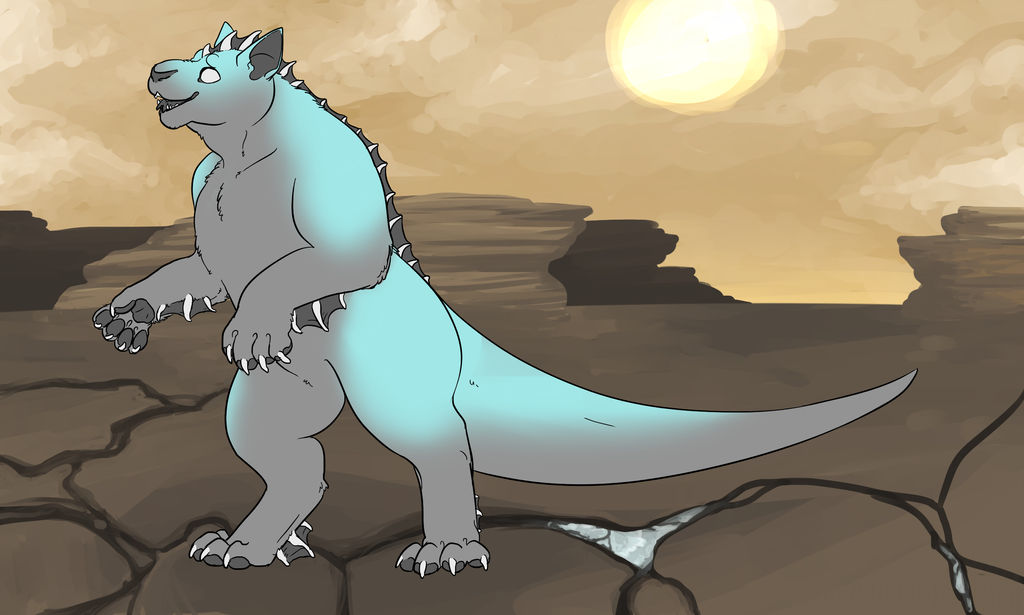
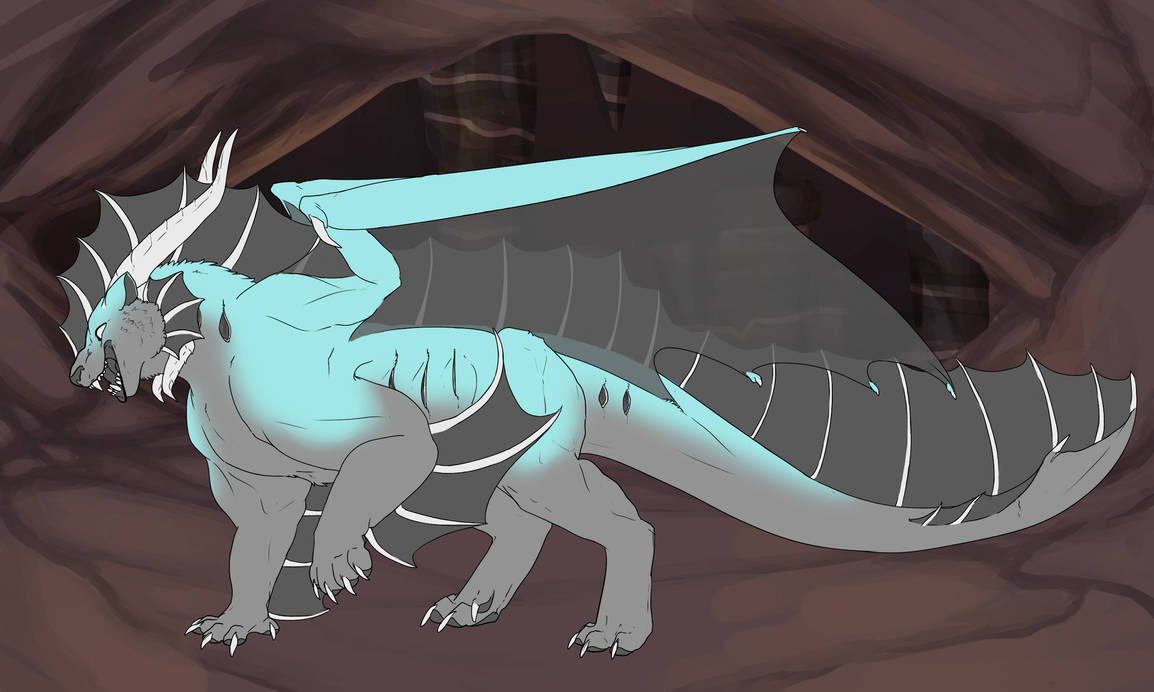
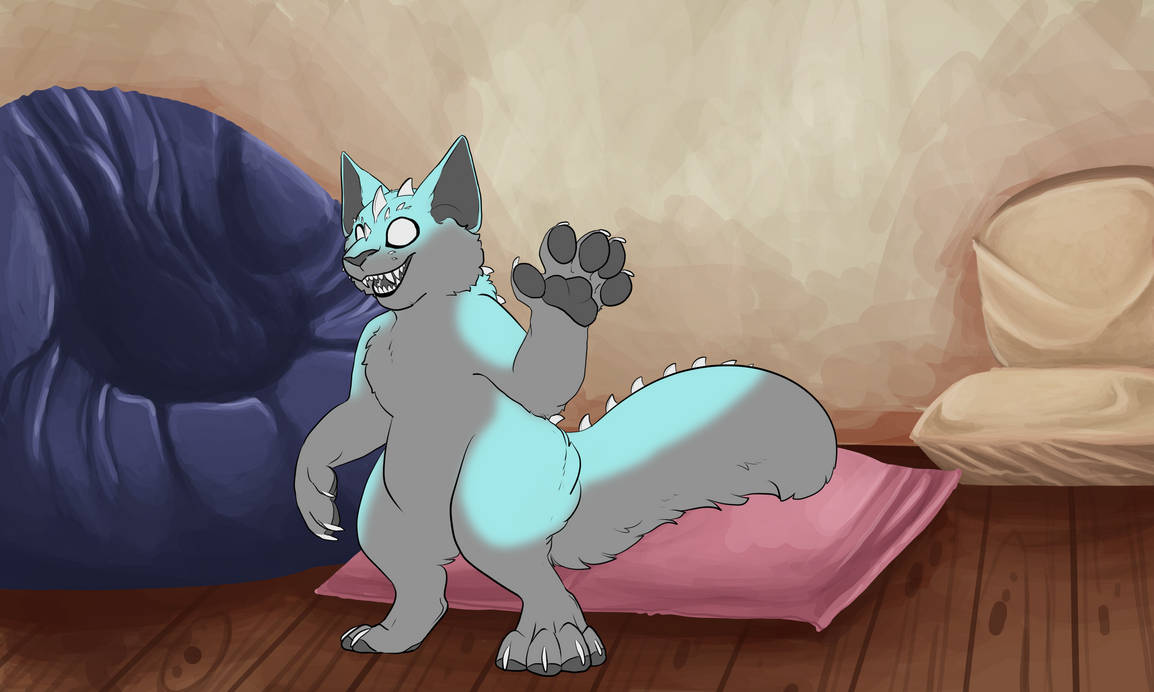
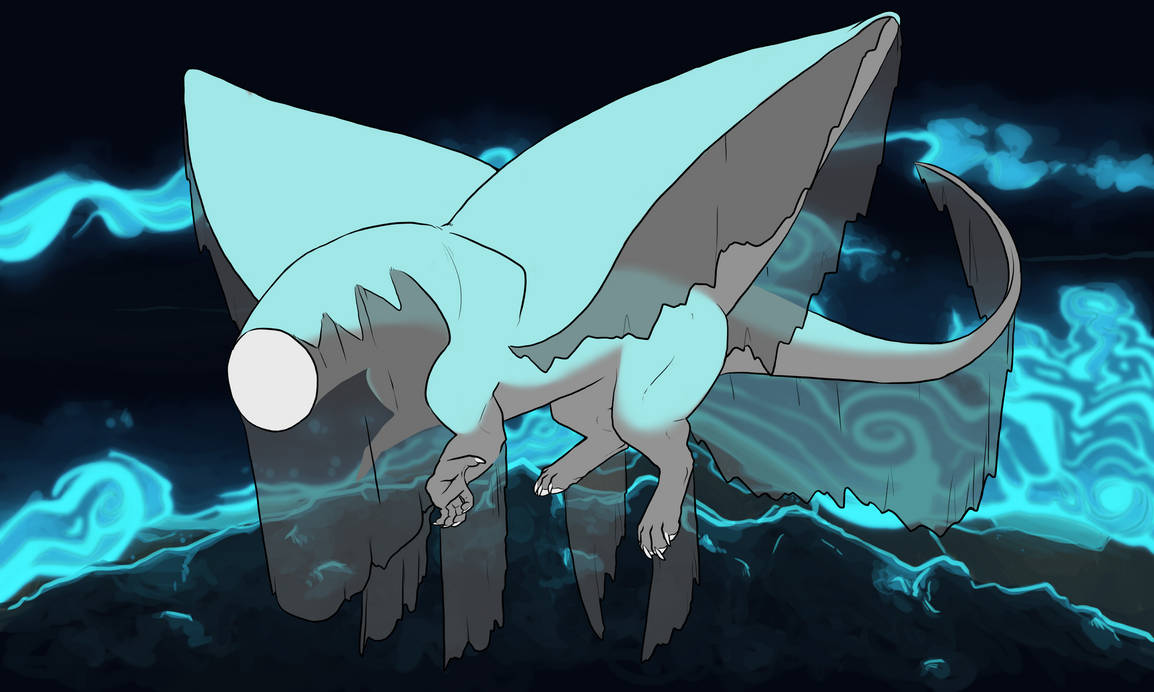
A marking like light shimmering through water. Can be line-like ripples or large blobs of light.
Range:
- Must be lighter than the base coat.
- Should be soft-edged.
- Waterlight can present as either large blobs of light (The Lanternlighter shows this presentation) or lines representing ripples in water - sort of like an outline of the former version. Both should be soft-edged and lighter than base.
Examples:

Erosion (nEr/ErEr) (Uncommon)
Category: Rixixi
Species: Rixixi
Erosion modifies a marking on the Rixixi, causing it to have a mottled texture to the edge
- Erosion alters any single marking on the Rixixi, causing the texture of the marking to be mottled and speckled. Speckles should be tiny, like the snowflake marking. Eroded markings can go very slightly out of range due to being textured out of the range.
- If Erosion is the only marking on the Rixixi, then Erosion will not visibly appear on the design. Alternately, it can be used on free marks.
- Recessive Erosion can modify the edge of one marking, while Dominant Erosion can modify the edge of multiple - as many as the designer desires.
Examples:

Erosion used on Pangare
Kintsugi (nKt/KtKt) (Rare)
Category: Rixixi
Species: Rixixi
Creates crackles across the body of the Rixixi, including large jagged pottery cracks, both filled with color. Dominant Kintsugi can go overtop of color mutations.
- Kintsugi can be any color, and may display up to two colors within the marking, which may be blended together. It may have a glittering texture. Dominant Kintsugi also uses two colors maximum, but may optionally display above and unaffected by color mutations like Albinism and Bicolor if desired.
- It should appear as two combined shapes: a streak of color that branches off, as if making a "crack" or "lightning bolt" shape, and also a jagged, geometric spot, like a broken piece removed from the Rixixi and filled in with color. Parts of the marking may resemble Groundbreaking without having to attach to a larger spot as long as these larger pieces do exist.
- It should be hard or textured-edged.
- Kintsugi does not have a maximum or minimum but must be clearly recognizeable.
Examples:
Gilded (nGild/GildGild) (Uncommon)
Category: Rixixi
Species: Rixixi
Metallic color faded randomly across the Rixixi's body.
- Can be the color of any metal, such as gold, silver, copper, bronze, etc. Uncommon metal colors are allowed, it's recommended to list what metal you referenced if it might not be immediately clear!
- Gilded presents typically as mostly-shapeless blobs or simple gradients, and can appear anywhere on the body, but should cover a maximum of 50% of the total body space including mutations. Gilded should generally be soft-edged or textured-edged. Gilded can have the same shape as simple markings, such as Sable, Pangare, Gradient, and Points, but should not take on the shape of complex markings like Tabby.
- Gilded may have a metallic sheen, gradient, and/or glitter texture to it.
- To avoid confusion with Forgeblood, Gilded should not present exclusively on blush zones, which are visible in the Forgeblood guide.
Examples:
Rainstreaks (nRn/RnRn) (Common)
Category: Rixixi
Species: Rixixi
Pale streaks falling down the Rixixi.
- Rainstreaks should be lighter than the base coat.
- Rainstreaks are small stripes - or streaks - that travel down the Rixixi from top to bottom. They generally follow the contours of the Rixixi and keep to relatively the same direction, though when they meet a new body part that direction can shift somewhat.
- Rainstreaks are hard-edged. The tail end of the rainstreak can be blended out.
- It has no maximum and can cover the full body if desired. It has no minimum, but should be noticeable on the design.
Examples:
Aura (nAu/AuAu) (Common)
Category: Rixixi
Species: Rixixi
A colorful sheen over the frills, spines, pawpads, and other similar areas of a Rixixi.
Range:
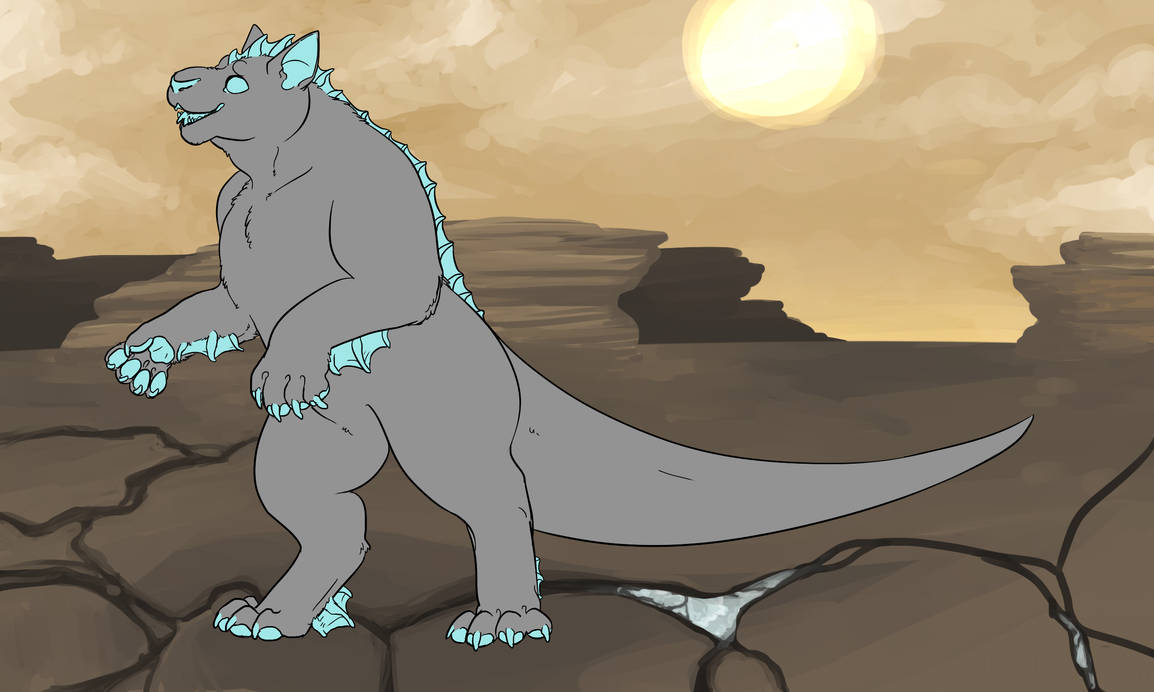
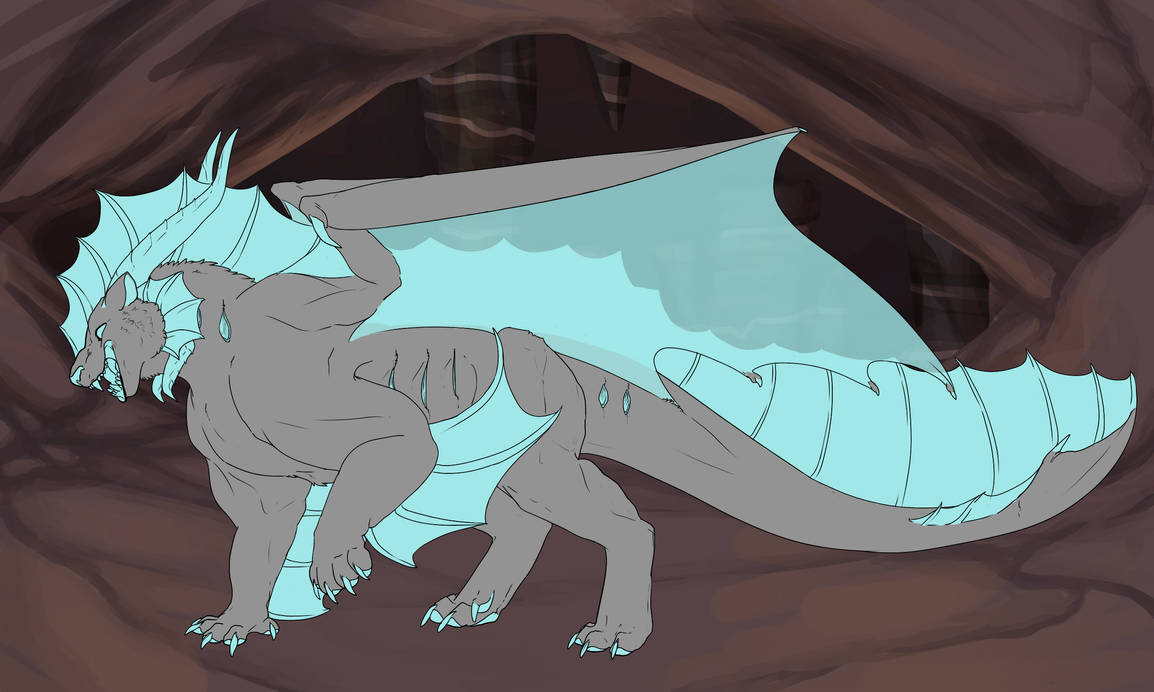
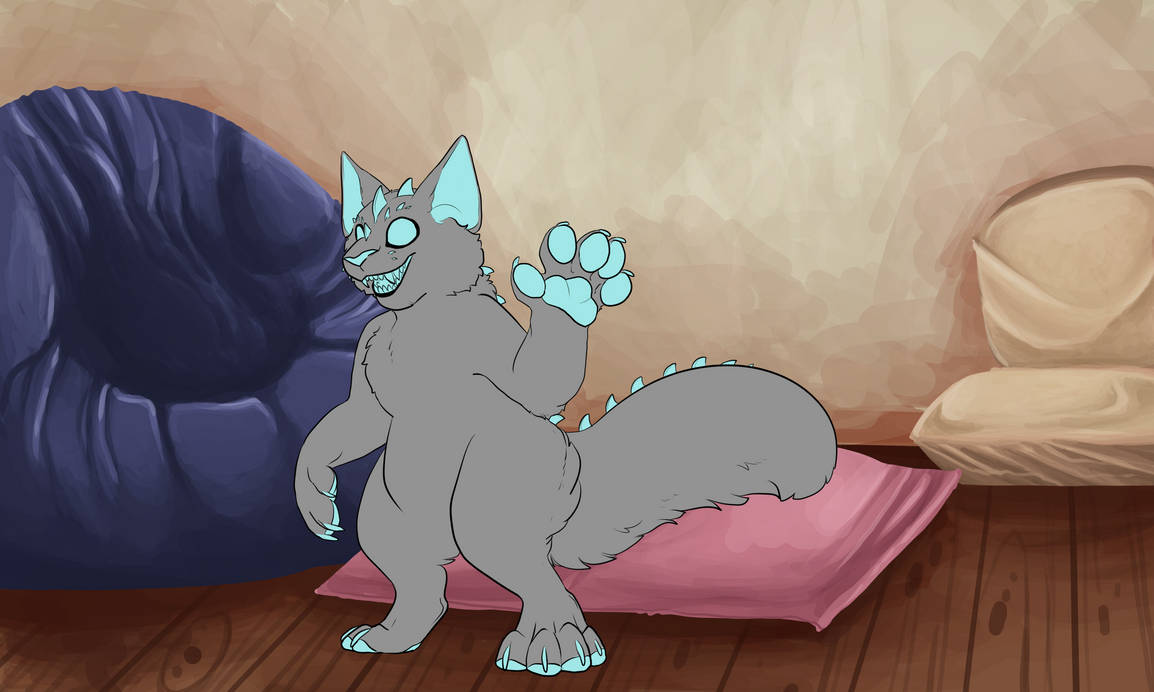

- Aura should add a layer of iridescence to the horns, nails, frills, skin, eyes, and/or teeth of a Rixixi. Skin and eyes should be less affected than harder materials, but still may be. Unlike with Flourish, the horns/nails/skin/etc will maintain their original color, however, iridescence will be applied on top of it.
- Applying multiple effects layers such as Overlay and Linear Dodge is recommended. Layer effect names will depend on your program.
Examples:
Ventspots (nVt/VtVt) (Uncommon)
Category: Rixixi
Species: Rixixi
Spots that look like a Rixixi's breathing vents dashed along the sides. May be bioluminescent. May actually color the breathing vents.
- Ventspots may be any color, and may optionally be bioluminescent.
- There is not a true strict range for Ventspots, but they should generally appear around the area where a Rixixi's breathing vents would be found. Going slightly up or down from this is absolutely fine. Going down the tail or onto the face is fine.
- Ventspots may be horizontal instead of vertical. Wide Vents do not have to be horizontal to match this if present.
- Ventspots may encircle Wide Vents if the mutation is present, or on Primal/Dwarf Primal Rixixi.
- Ventspots may optionally color only the Wide Vents if the mutation is present, or on Primal/Dwarf Primal Rixixi.
Examples:

Oil Paint (nPnt/PntPnt) (Rare)
Category: Rixixi
Species: Rixixi
Oil Paint creates irregular and iridescent splatters of color that can be any base coat. Dominant Oil Paint can be up to three colors!
- Oil Paint should generally be an at least slightly irregular shape, but still be recognizeable as a large spot.
- Recessive Oil Paint may be any base color, and should be iridescent. Dominant Oil Paint may be up to three base colors, which can be separated into different spots, gradiented together, or blended in a more textured manner. It should still be iridescent.
- The spots can appear anywhere on the body. As they are large, they should appear on a minimum of roughly 30% of the body and a maximum of roughly 70%.
- If markings appear above Oil Paint, they can be color-shifted where they touch the spots - it must still follow the marking's color rules, however! With modifier markings like Glitter and Lunar, this can result in an entirely different modifier color being present on the spots than the color present on the main body.
Examples:
Lycaon (nLyc/LycLyc) (Rare)
Category: Rixixi
Species: Rixixi
Lycaon is a marking similar to that of African Painted Dogs. It has a bottom layer of black and a top layer that can be any color.
- Lycaon is a double-layered marking. Other markings on the Rixixi should not appear 'between' the top and bottom layers of Lycaon. The bottom layer of Lycaon should be black or off-black (appearing black on the Rixixi's base). The top layer of Lycaon may be any color. The top layer of Lycaon must stay within the bottom layer and cannot touch or go outside the edge of the bottom layer.
- Lycaon is made up of hard-edged spots scattered around the Rixixi. They can be a mix of large and small spots, but there should be large spots present. The black portion of Lycaon should cover between 30% and 60% of the Rixixi (there is no minimum on the coverage of the any-color spots, but it must be below 60% as it has to stay within the black spots.)
- Recessive Lycaon can have one color in the any-color spots. Dominant Lycaon may have two colors, which can be in separate color blocks or gradiented together.
- Markings like Glitter, Lunar, Horizon, and so on can alter the color of the black spots. Splash can add a base coat gradient to either the black spots or the internal any-color spots.
Examples:
Sylvan (nSvn/SvnSvn) (Rare)
Category: Rixixi
Species: Rixixi
Sylvan creates a shape like a butterfly or a leaf somewhere on the Rixixi.
- There should be one single Sylvan marking of any size, and it can be in the shape of a leaf or butterfly's wings.
- The base of Sylvan can be any two colors, and may optionally be blended together.
- There should be veins like that of a leaf or butterfly's wing - this can be any color, and can have a halo of color around them.
- Sylvan can be soft-, hard-, or textured-edged, but should not be fully blended out.
- Sylvan may optionally have spots of any color. Dominant Sylvan can have eye spots without the Eyespot gene (located on the Sylvan shape only)
- Sylvan may optionally have a border of any color without requiring the Bloom gene.
- If the Rixixi also has Insect Wings, the Insect Wings may take on the Sylvan pattern.
Examples:
Noveau (nNvu/NvuNvu) (Rare)
Category: Rixixi
Species: Rixixi
Noveau is a vivid marking displaying as up to two jagged bands of color, layered over each other.
- The main shape should be a broad zigzagging pattern between the belly and spine of the rixixi, and can be any base color. The second color should display on top of this and loosely follow the same shape in a much thinner band, and can be any base color as well, but must be visually distinct from the first band.
- You can choose to only display one zigzag - this can be either a thick or thin pattern.
- The pattern for Noveau can vary heavily in shape as long as it can be considered a broad zigzag and a thin zigzag. It may be hard- or textured-edged.
- Dominant Noveau (NvuNvu) may be any color, as long as the two bands are visually distinct from each other.
- Each individual band may be a two-toned gradient if desired, but must follow dominant/recessive rules as relevant - recessive can only be two-toned within the same base coat, while dominant may be any colors at all.
Examples:
Chain (nChn/ChnChn) (Uncommon)
Category: Rixixi
Species: Rixixi
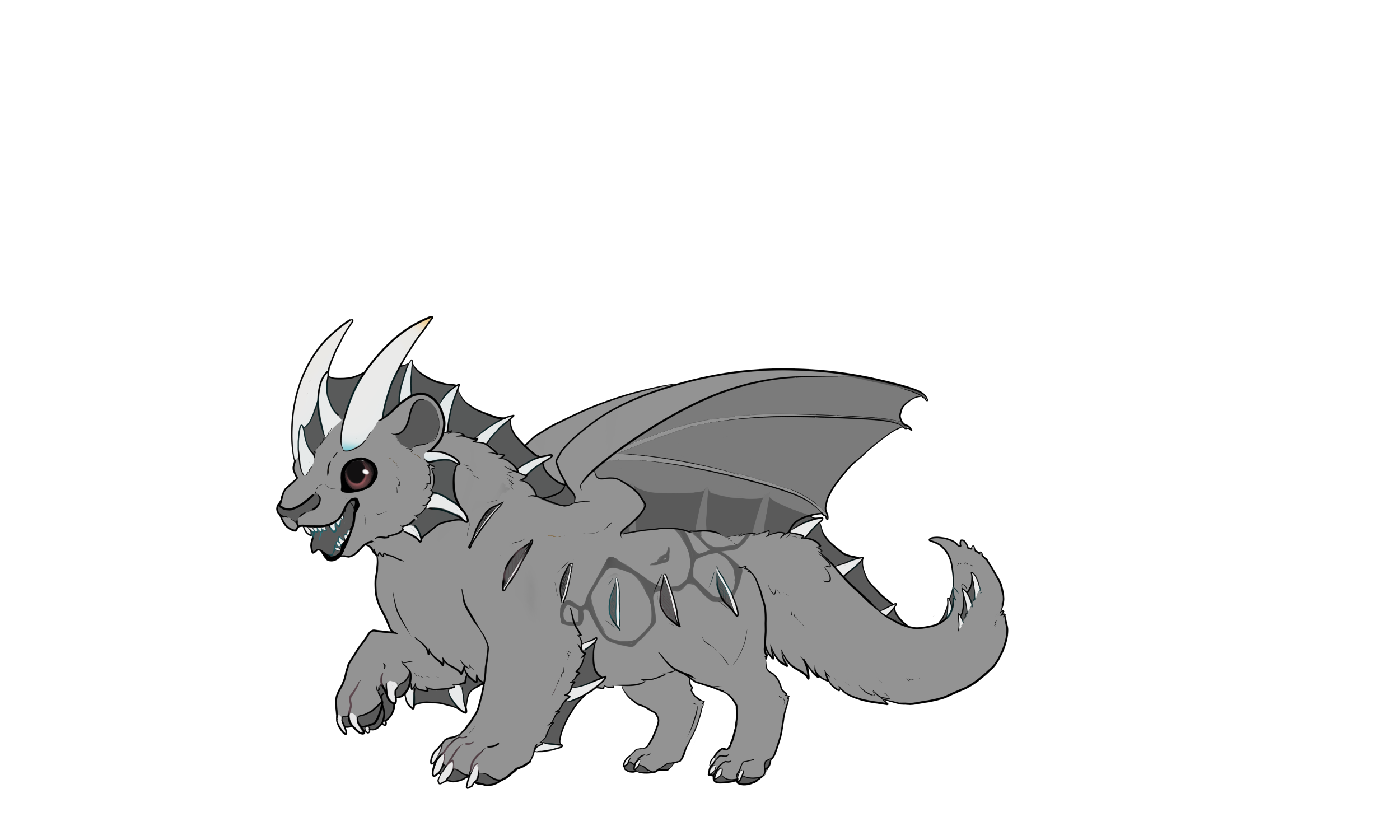
A dark, hard-edged marking of connected, geometric hollow blobs.
- Chain must be darker than the base coat. It is typically hard-edged.
- Chain is made up of semi-random hollow geometric markings, more rounded and random than what would be found in the Hexagon marking. They should connect together, whether by more geometric markings or by lines. These should be similar to the markings found on the Chain Catfish.
- If an Ixi has both Chain and a spot marking, such as Inkblot, Cowspot, or Koi, the spot marking can fill in the Chain marking, regardless of the size requirements of the original spot marking.
- It has no maximum and can cover the full body if desired. It has no minimum, but should be noticeable on the design.
Examples:
Vest (nVes/VesVes) (Common)
Category: Rixixi
Species: Rixixi
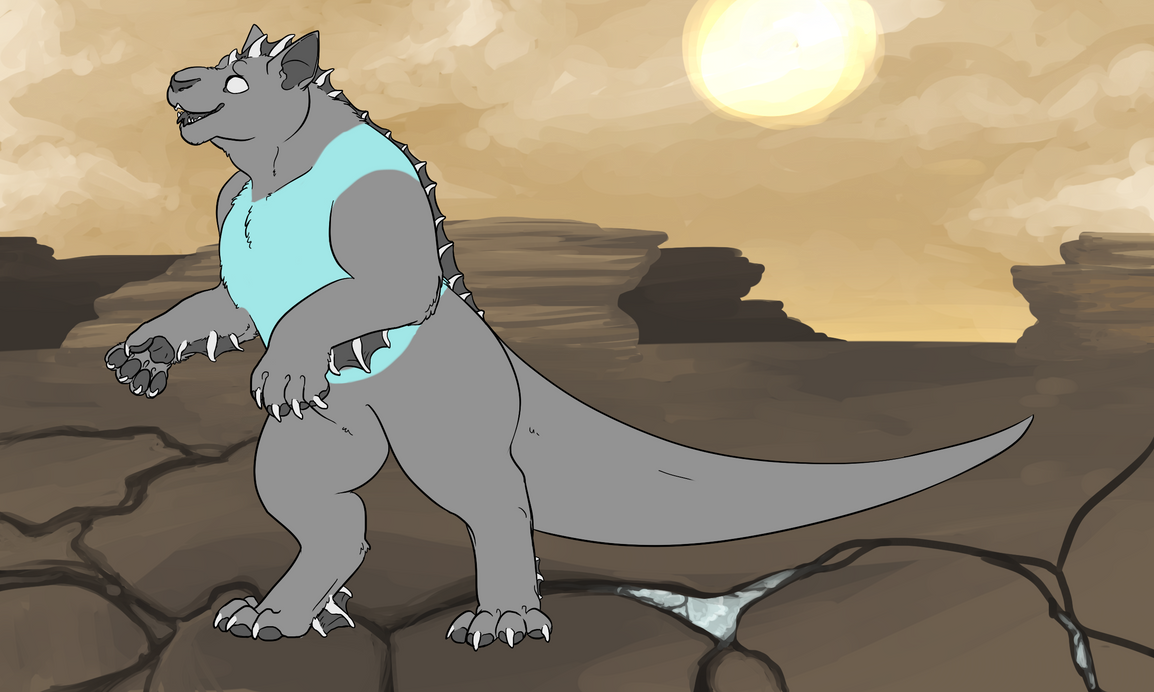
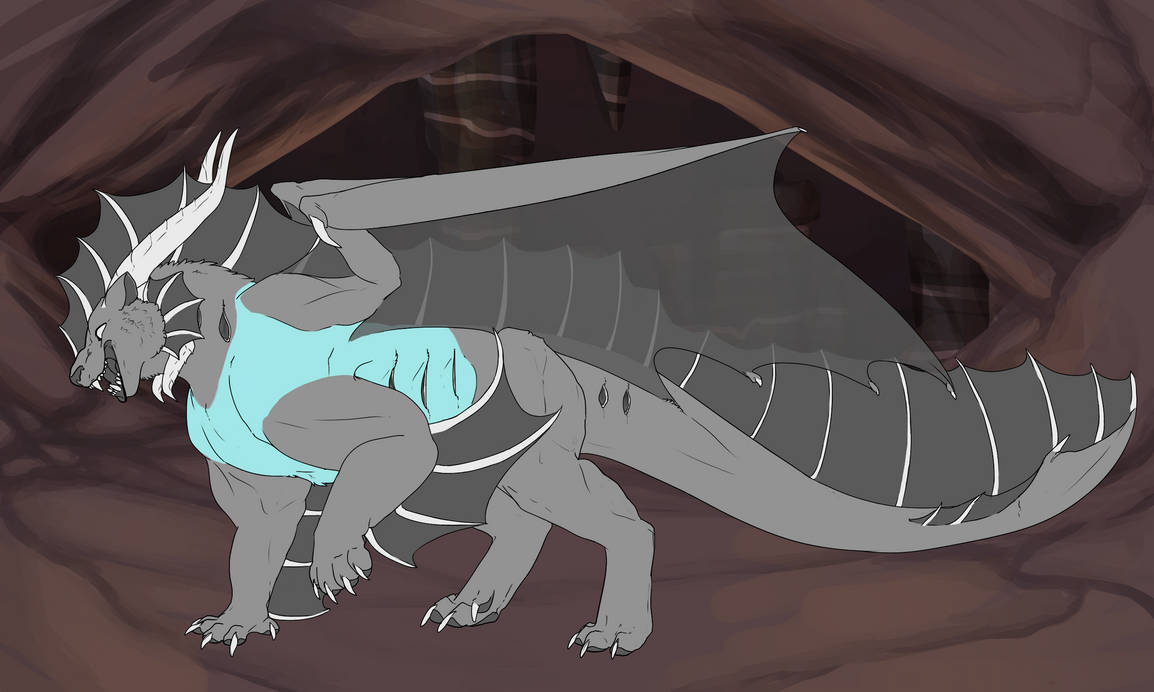
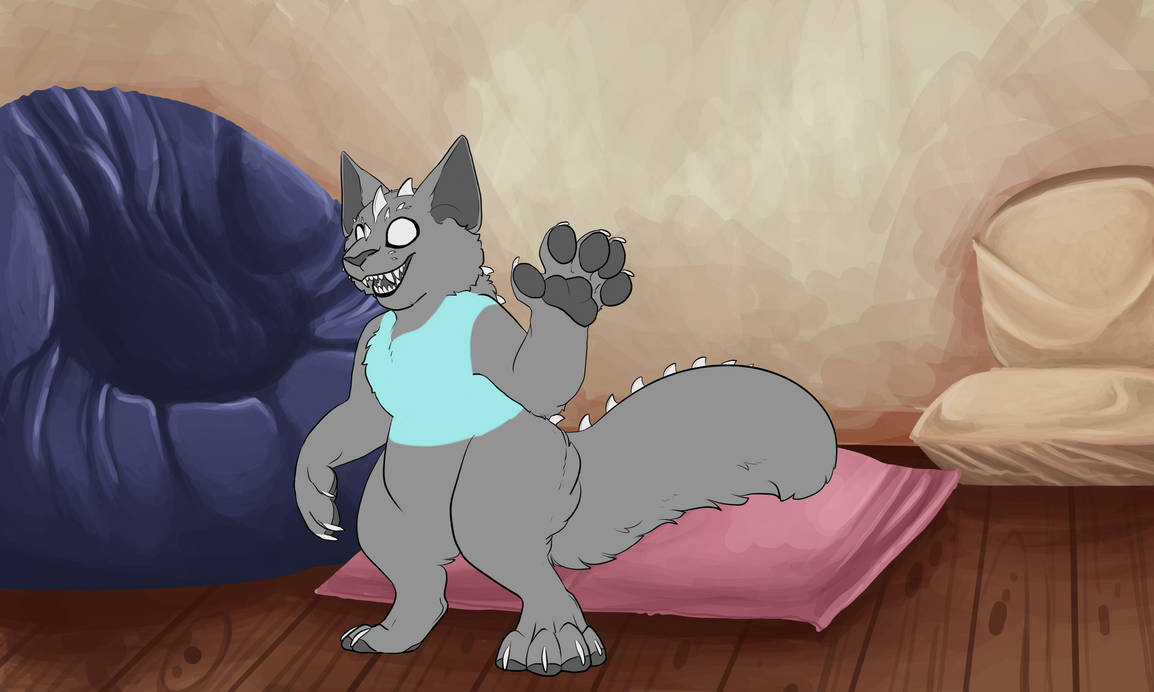
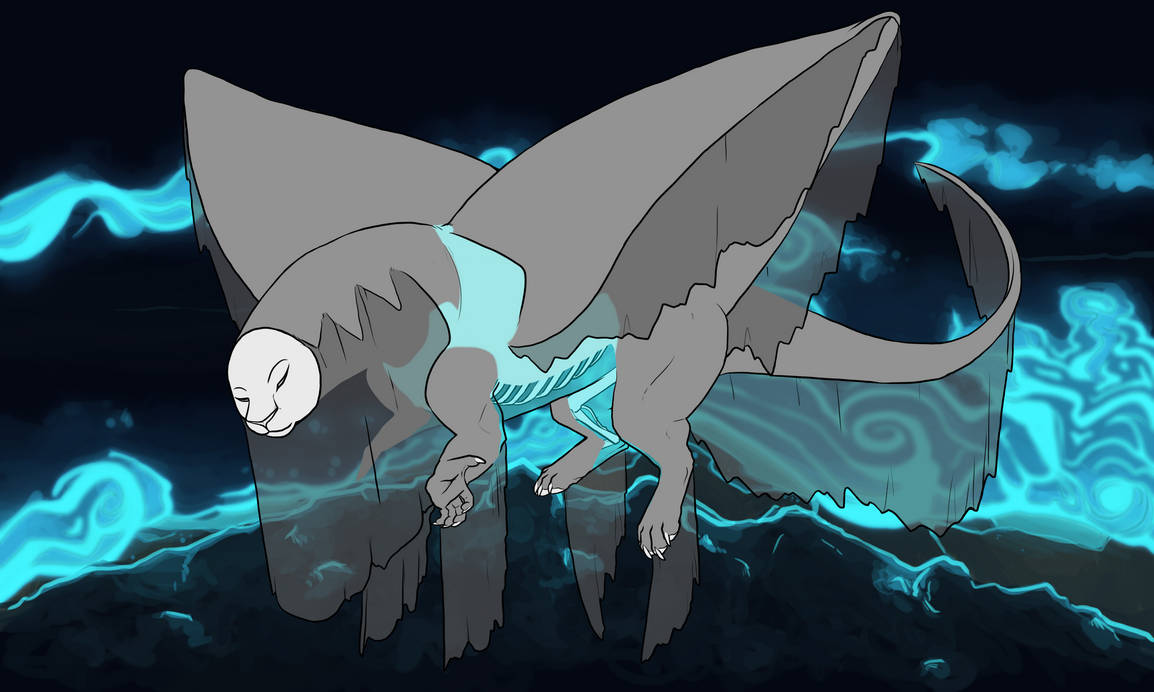
A patch of color located on the upper torso of the Rixixi.

Range:
- Vest may be any color, and may display up to two colors within the marking, which may be blended together.
- Vest does not have a restriction on edge hardness.
Examples:
Brindle (nBr/BrBr) (Uncommon)
Category: Rixixi
Species: Rixixi
Thin stripes that can appear all over the body. Both lighter and darker than the base coat.
- Brindle appears similar to the marking of the same name in dogs and horses. It can appear as realistically as you like, with blotches of heavier striping and texturing, or it can simply be thin striping, thinner and more even than Tabby.
- Brindle can be both darker than AND lighter than the base coat. This is optional. It can also be only darker than OR lighter than the base coat if desired. If appearing as both colors and affected by a marking like Glitter or Lunar, two tones are allowed.
- It is typically hard- or textured-edged. It should not be blended out, but can be somewhat soft-edged.
- It has no maximum and can cover the full body if desired. It has no minimum, but should be noticeable on the design.
Examples:
326 results found.